What it is
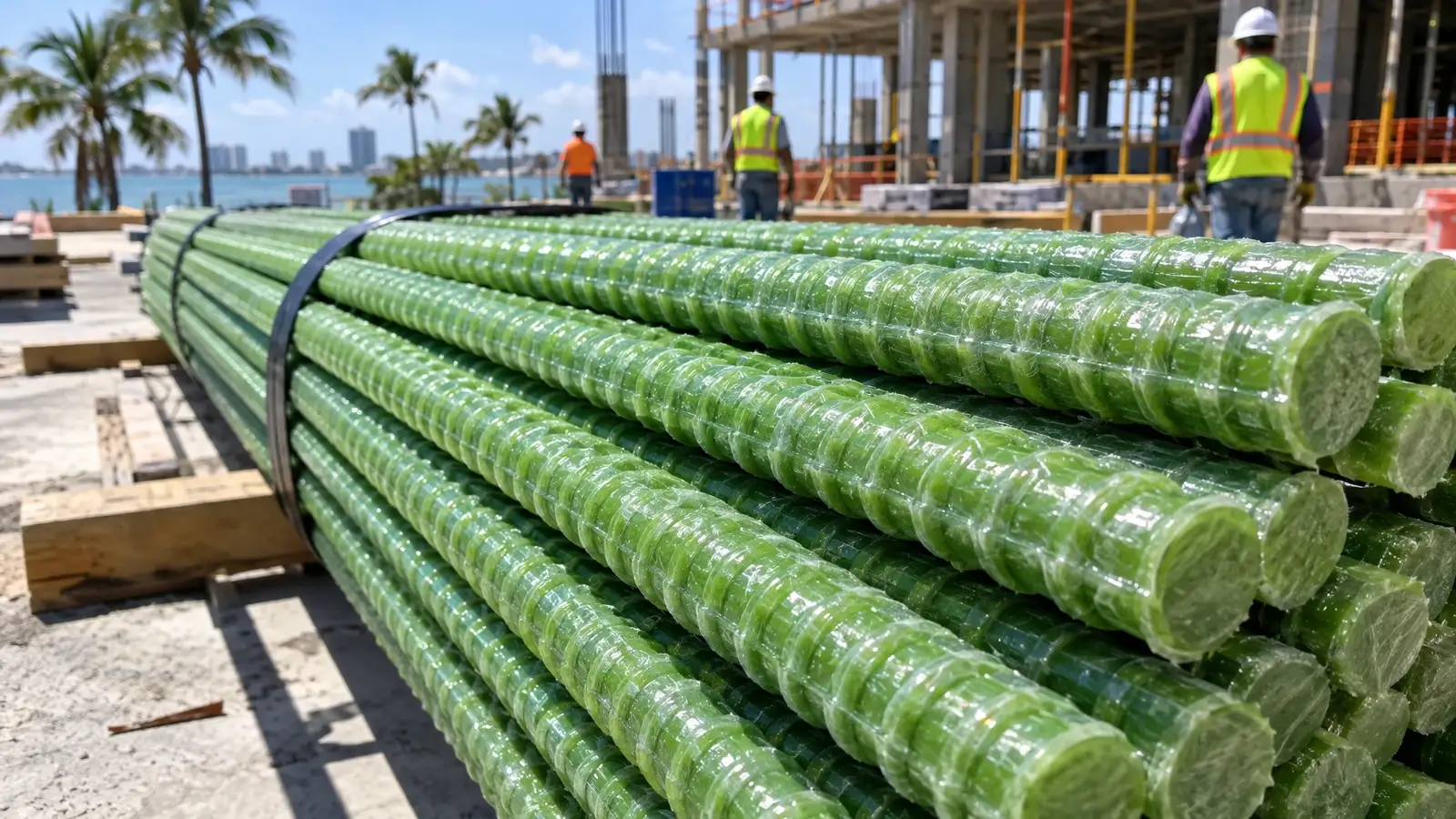
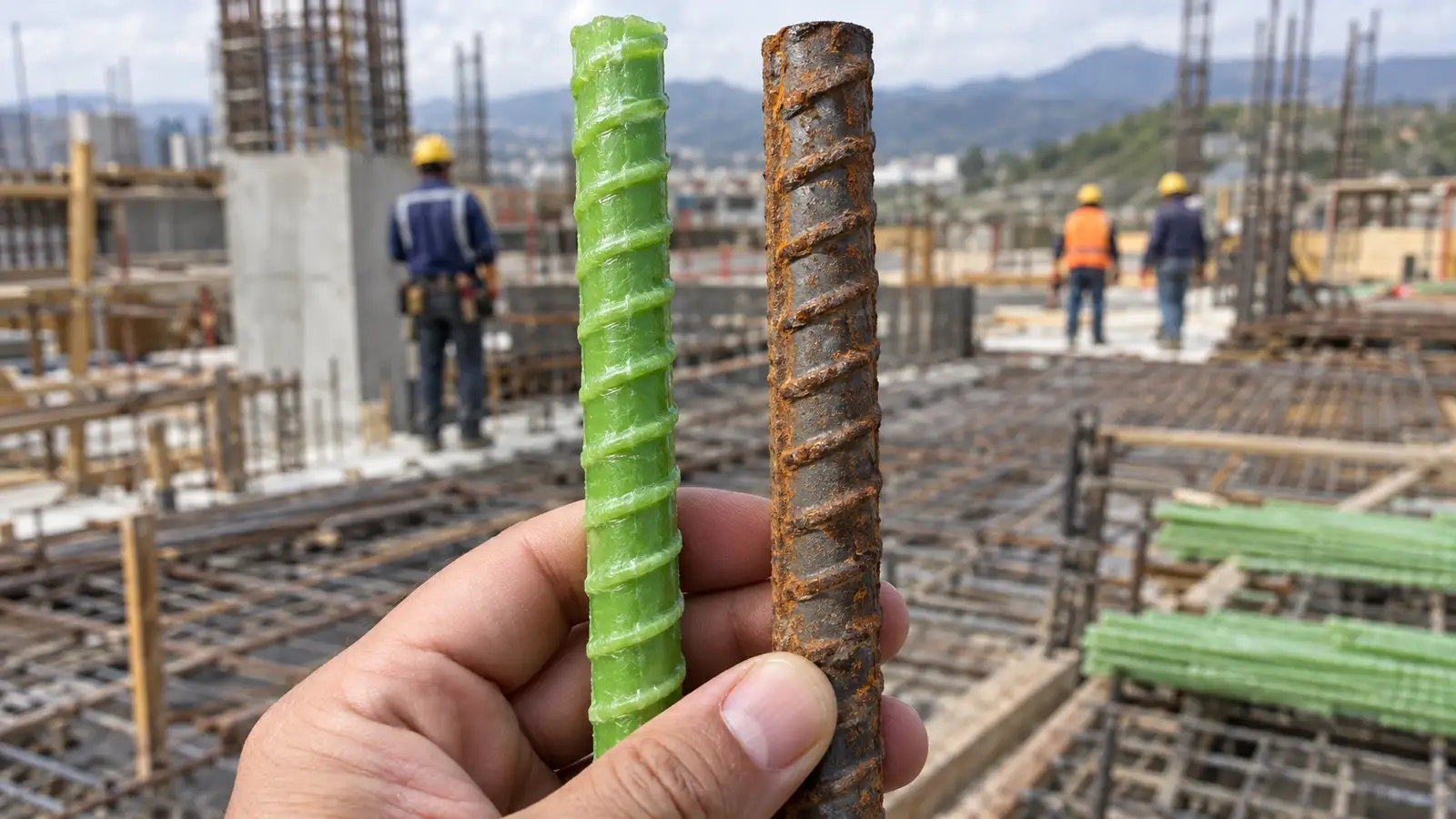
GFRP stands for glass fiber reinforced polymer. A GFRP bar is made of continuous glass fibers held in a resin, with a ribbed or sand-coated surface that bonds to concrete.
It is used like steel rebar, but it is a different material with different properties.
What is different
GFRP does not rust, does not conduct electricity and is about a quarter of the weight of steel. It has high tensile strength, but it is less stiff than steel and it does not yield the way steel does, so designs follow their own rules.
Design guidance such as ACI 440 covers how engineers use GFRP, and it generally ignores the bar’s contribution in compression.
Where it fits
GFRP fits where corrosion shortens the life of steel: seawalls, docks, coastal slabs, pool decks and foundations near saltwater. It also fits where non-conductive, non-magnetic reinforcement is useful.
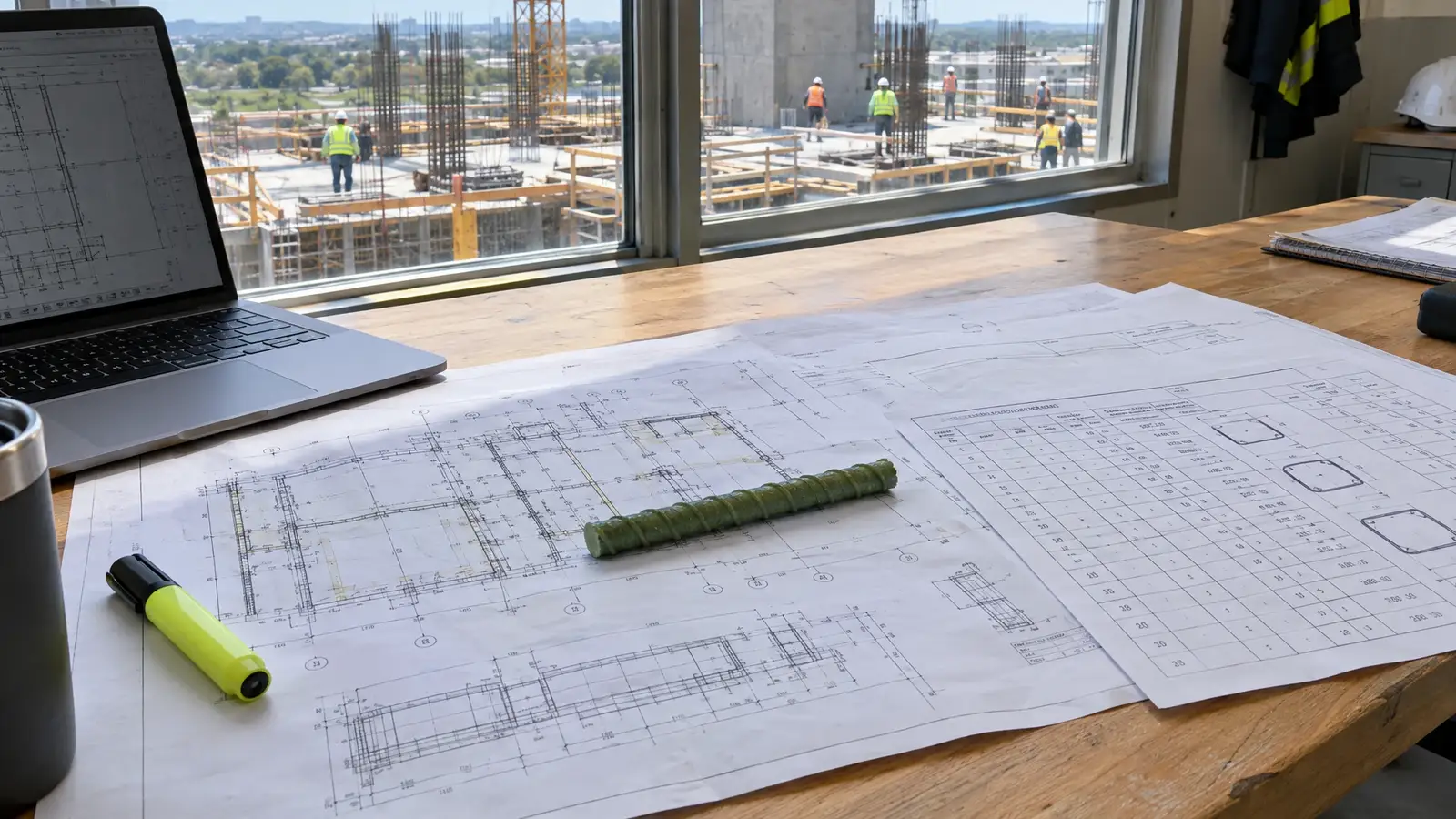
It is not a drop-in swap. The engineer must specify it.
Handling and ordering
Because bars are light, they are easy to carry and place. They cannot be bent in the field, so bends, hoops and stirrups are formed at the factory and must be on the order.
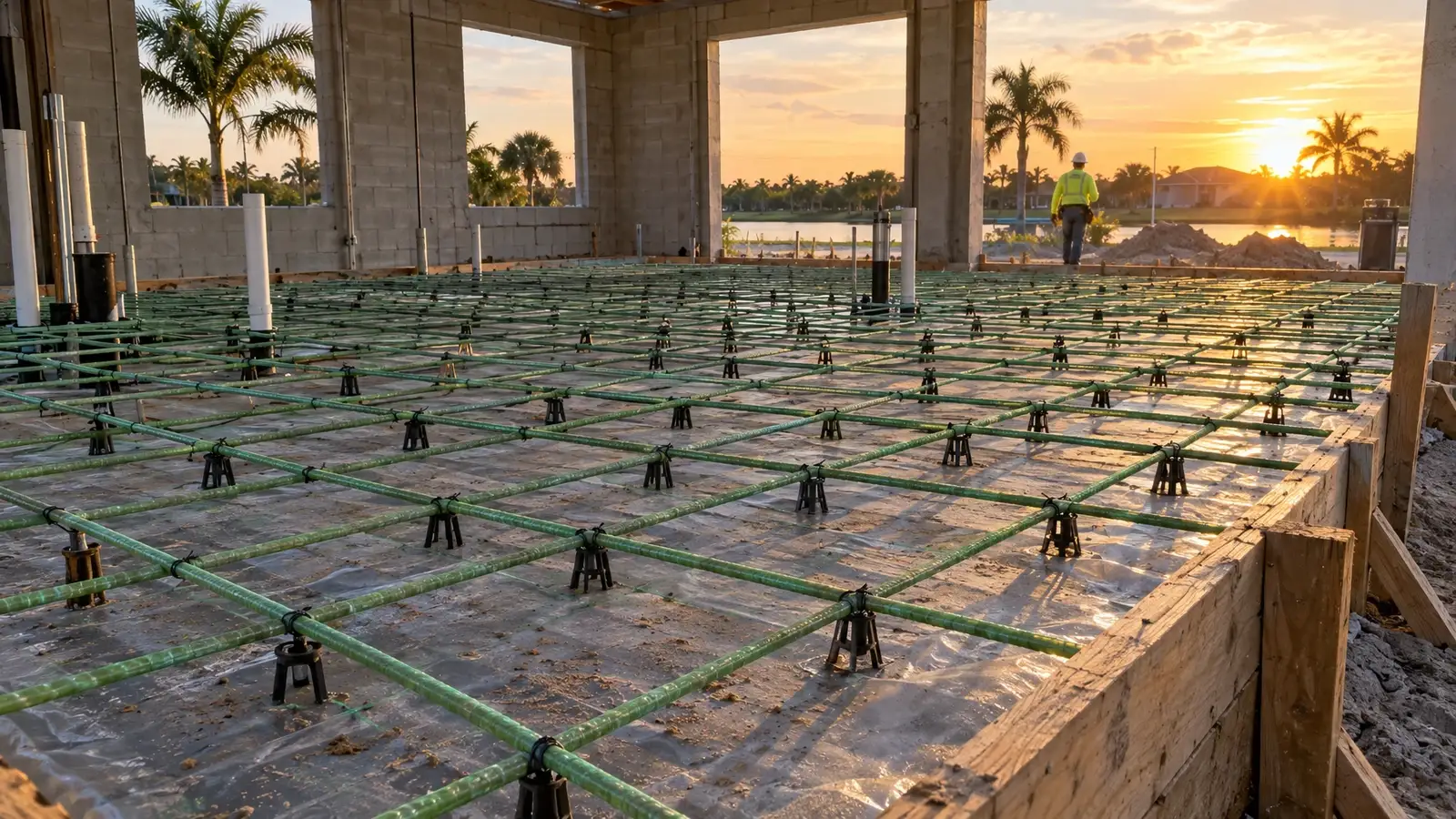
Use chairs and ties made for composite bars and support the grid well before a pour.