
Wind pressure and uplift
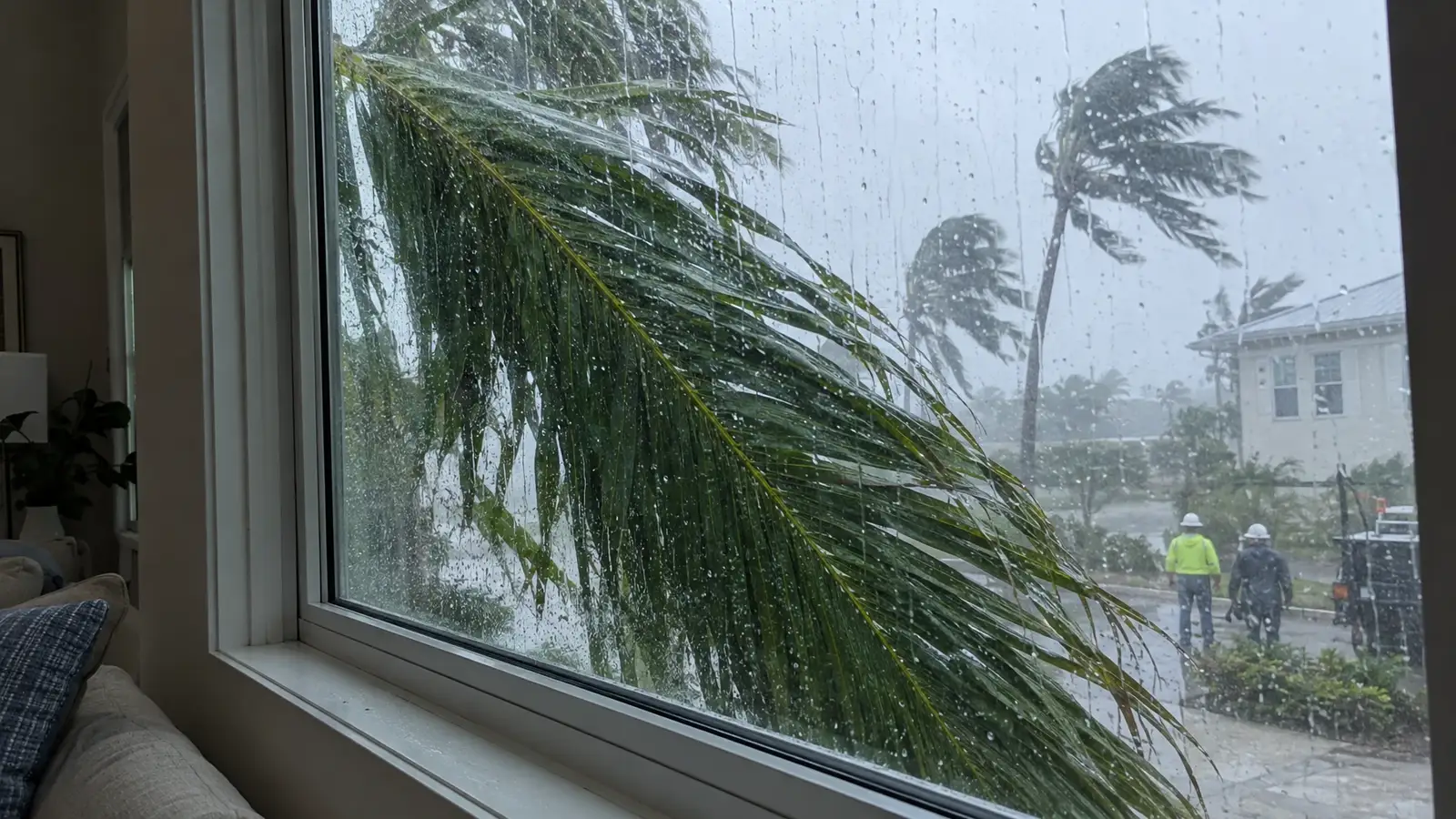
Wind pushes on windward walls, pulls on leeward walls and lifts roofs. Roof decks, soffits and garage doors are common starting points for damage, because they are large surfaces with relatively few fasteners.
A continuous load path, from the roof to the foundation, keeps those forces from separating the building.
Broken openings
When a window, door or garage door fails, wind enters the building and pressurizes the inside, which can push the roof up from below. Protecting every opening is one of the most important steps in a wind-resistant design.
Flying debris is the usual cause of broken openings, which is why impact testing exists.
Water follows wind
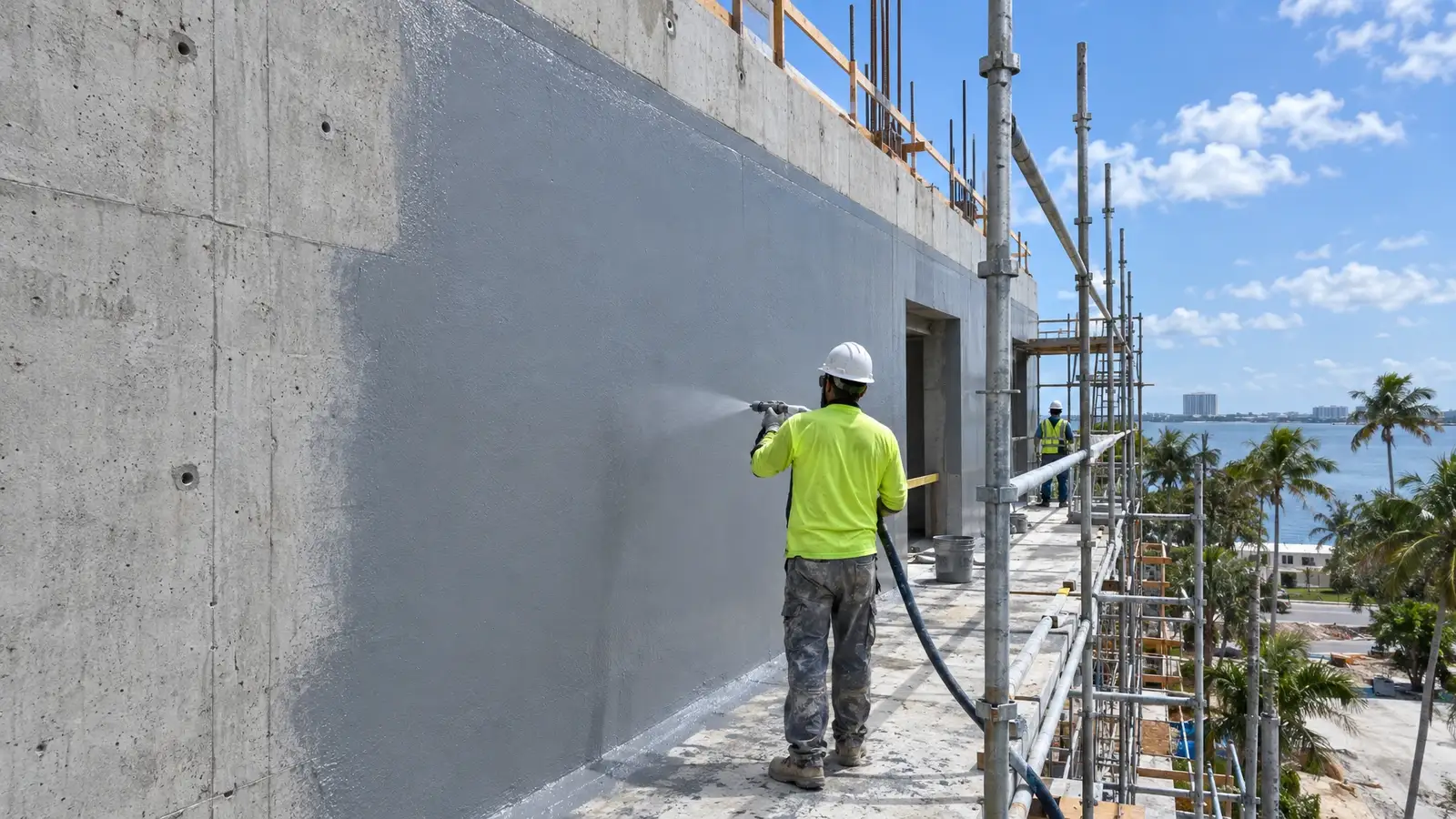
Wind-driven rain is pushed sideways into gaps around windows, doors, penetrations and wall joints. Flashing and air and water barriers keep rain from finding a path behind the finish.
Water damage often does more harm than the wind itself.
Strong walls and tight connections
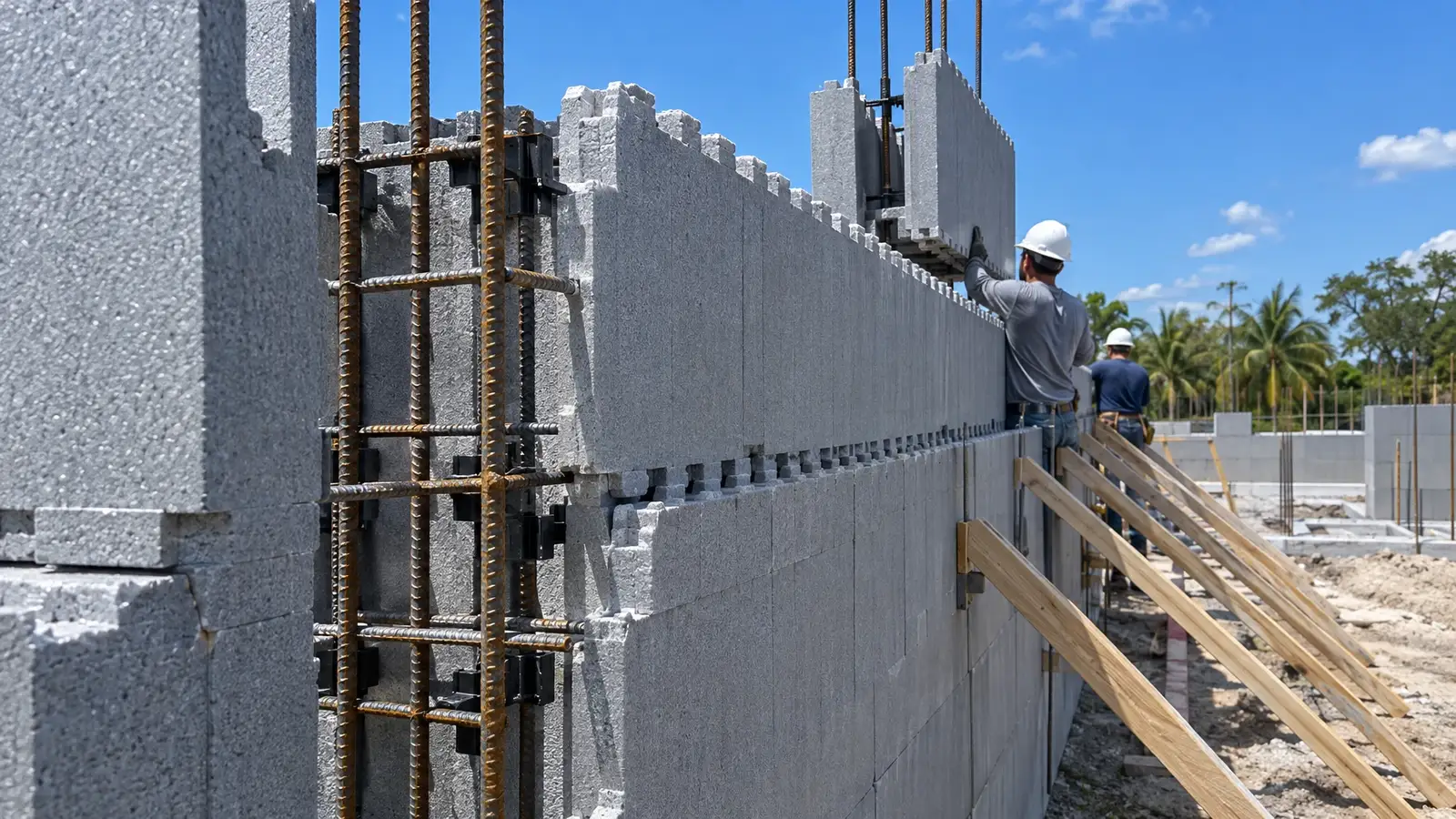
Reinforced concrete walls, such as ICF and reinforced block, resist wind pressure and debris impact well, and they provide a stiff base for connections. Well-designed straps, anchors and ties tie the roof, walls and foundation together.
The whole system counts: walls, openings, roof, connections and flashing.