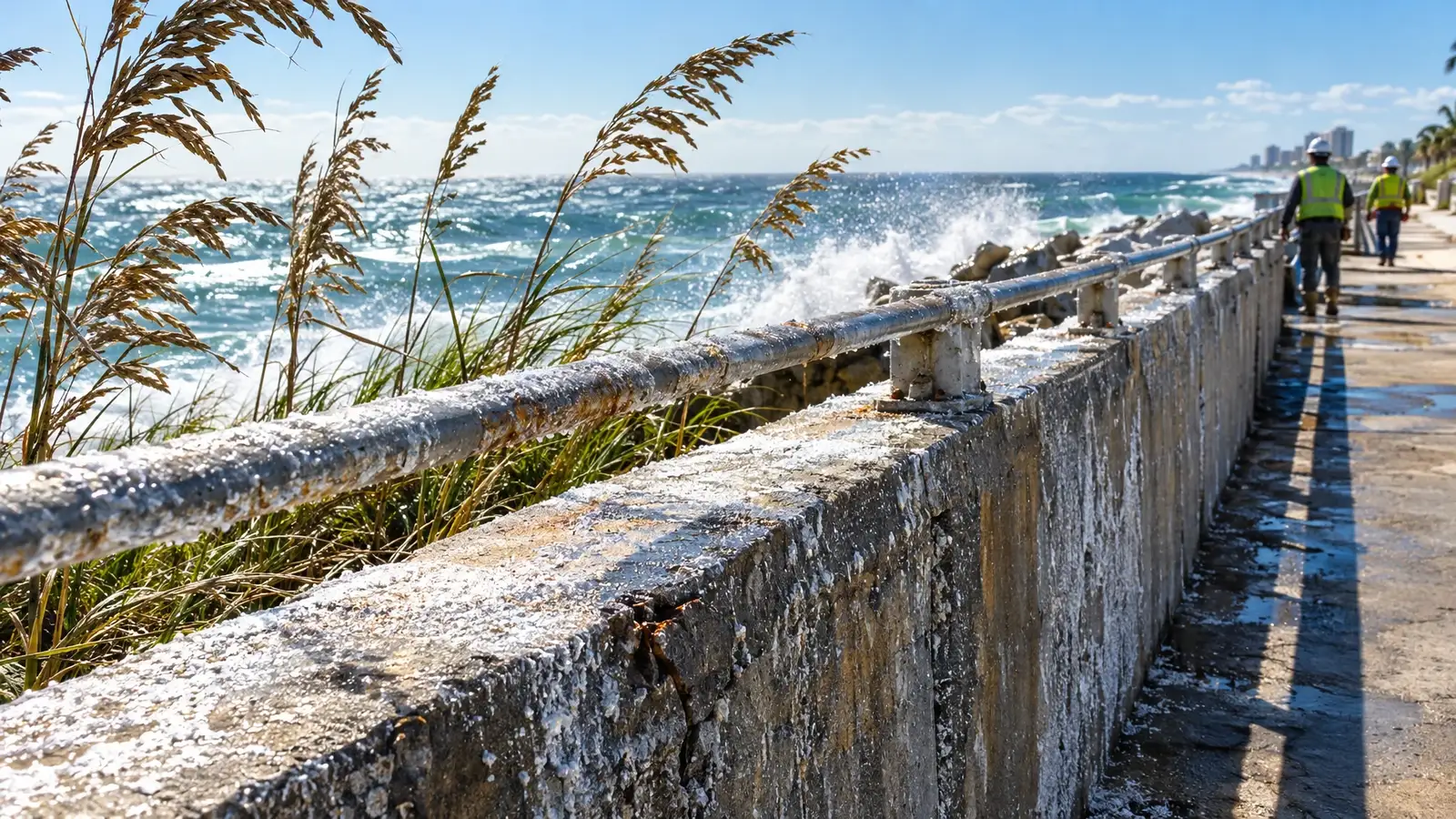
Concrete protects steel, for a while
Fresh concrete is highly alkaline, and that chemistry forms a thin protective layer on the steel inside it. As long as that layer survives, steel can stay sound for decades.
Cover, the thickness of concrete over the bar, is the first line of defense.
Salt gets in
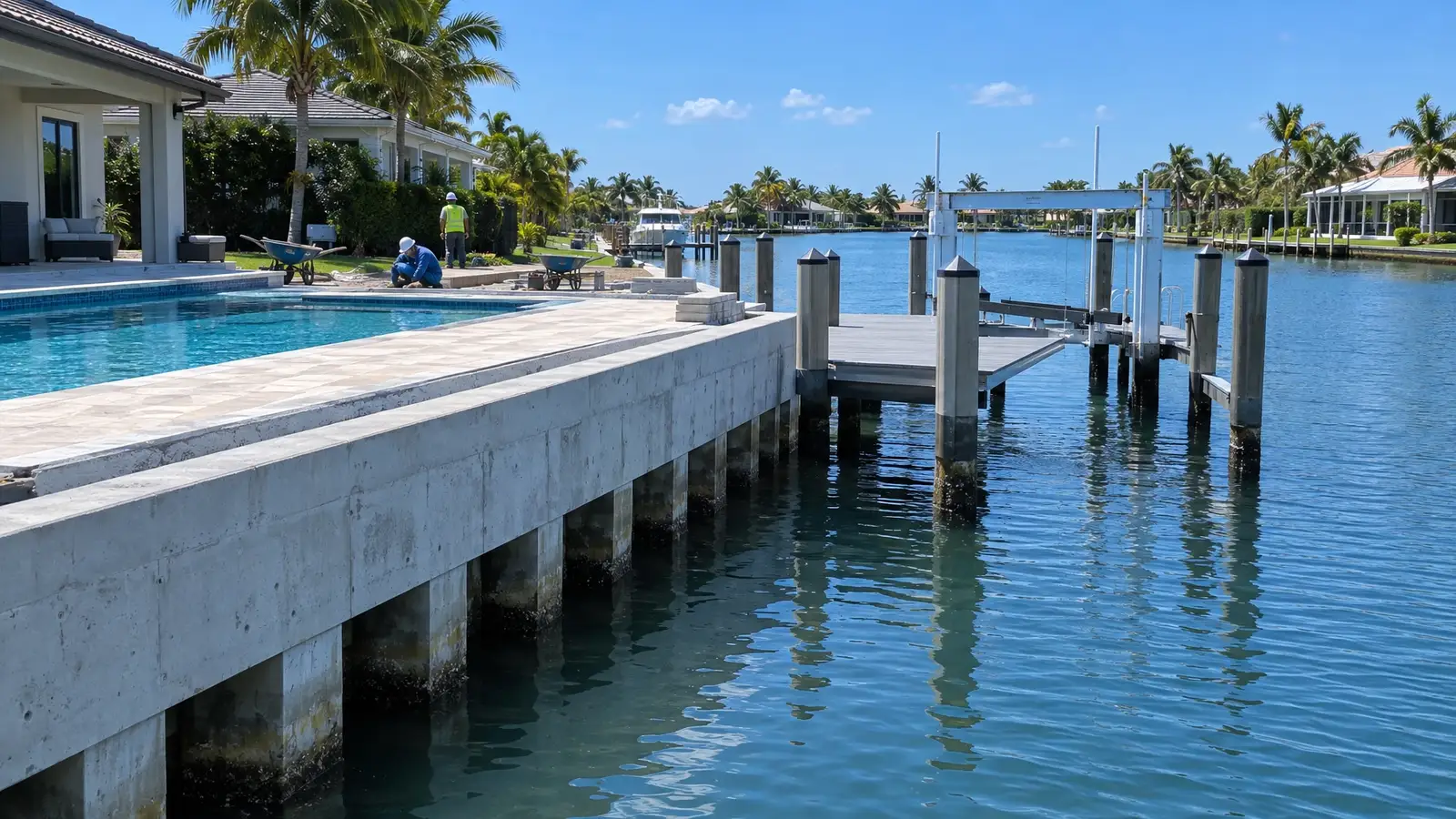
Chlorides from seawater and salt spray travel into concrete through pores and cracks. When enough chloride reaches the steel, the protective layer breaks down and rust begins.
In a marine environment, wetting and drying cycles speed that process.
Rust takes up room
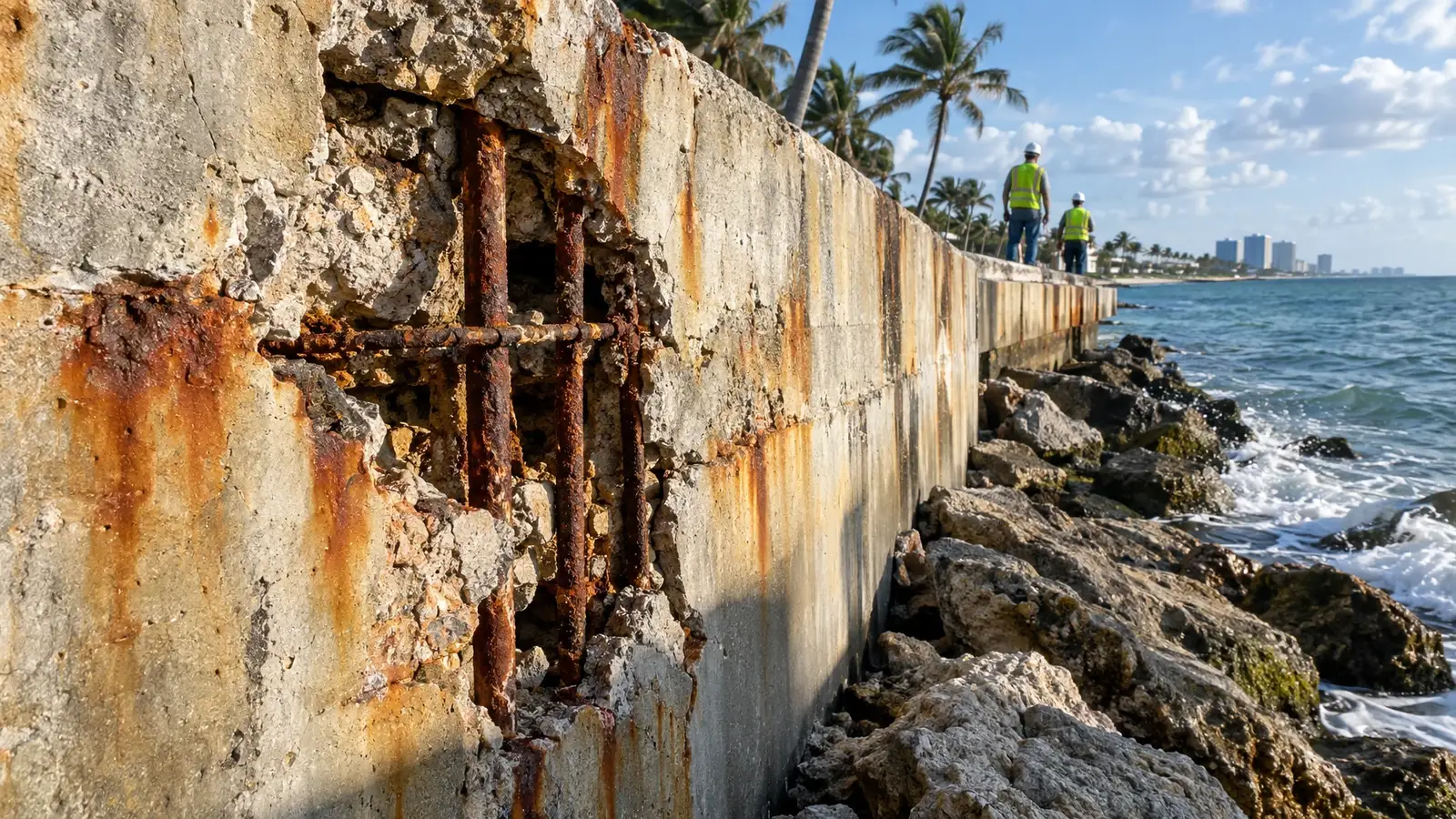
Rust takes up more space than the steel it came from, often several times as much. That swelling pushes on the concrete from the inside, cracks it and breaks off pieces in a process called spalling.
Cracks let in more salt, and the cycle accelerates.
Ways to slow it down
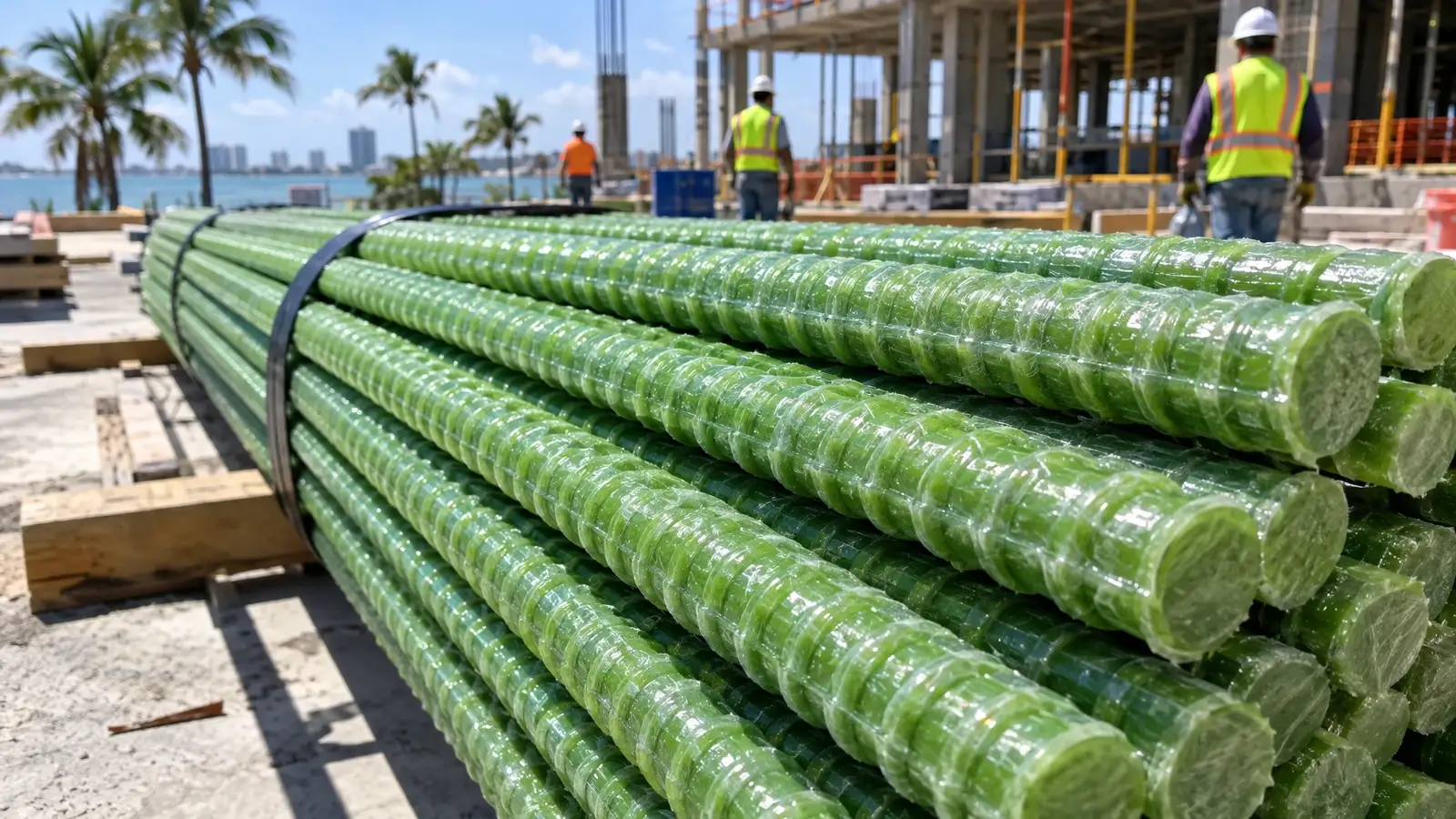
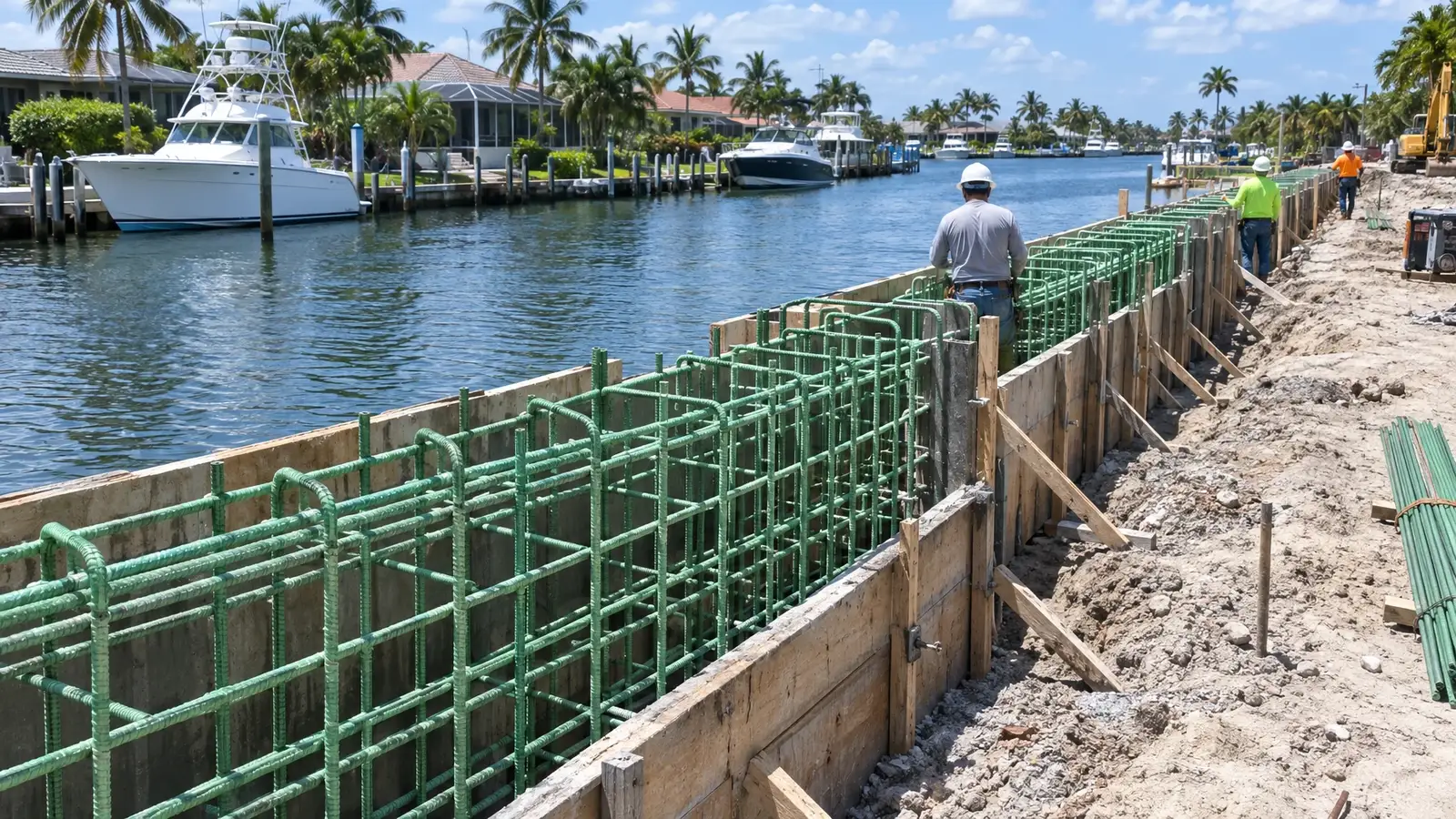
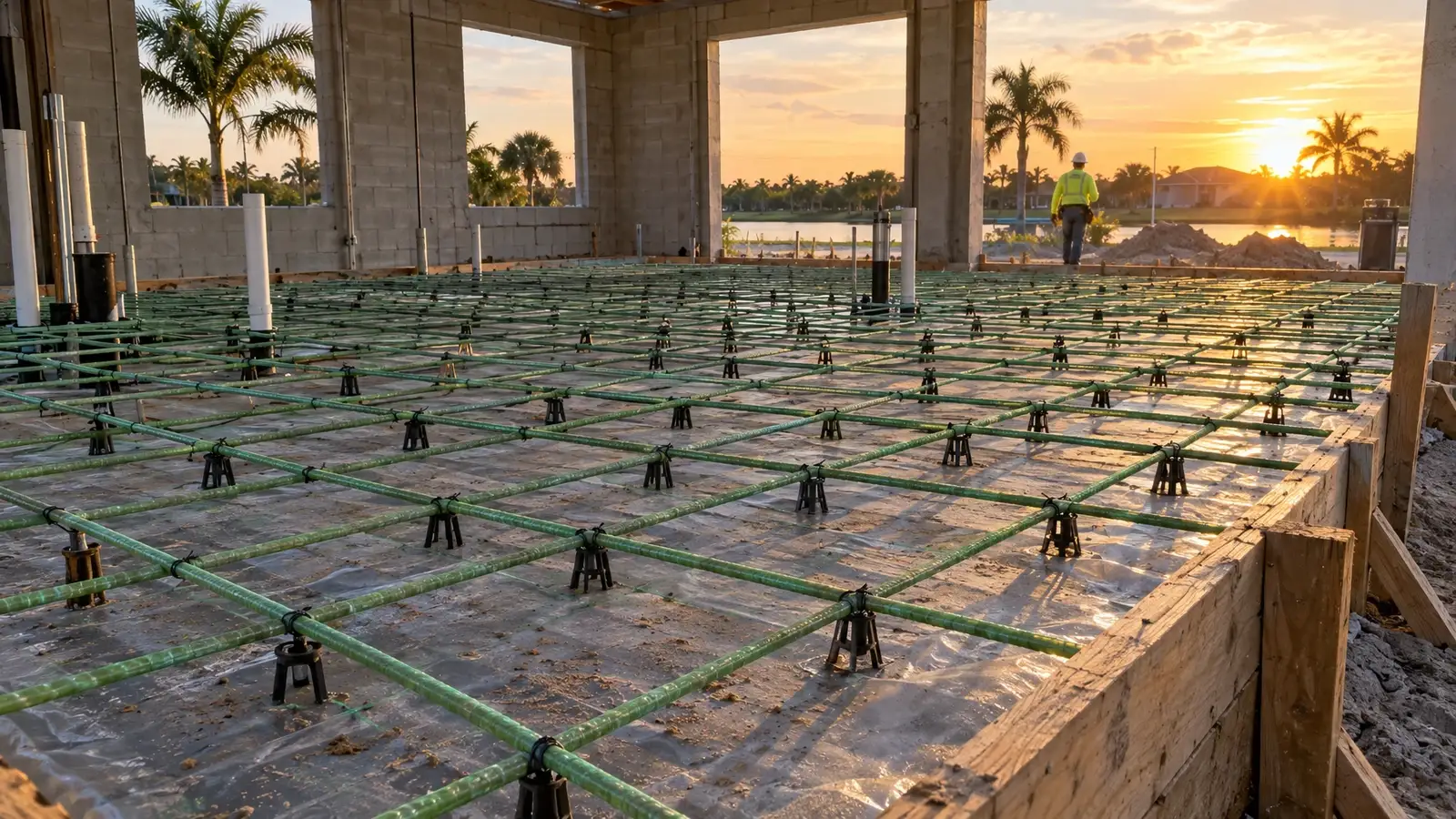
Designers add cover, use low-permeability concrete, coat the steel or choose reinforcement that does not corrode, such as GFRP. In severe settings, designs often combine several measures.
Your engineer chooses what fits the exposure.